Where should I live when moving to Orlando?
Quick Answer
Orlando is not one single lifestyle, so the right place to live depends on how you want daily life to feel. Based on the February 2026 market figures provided, Horizon West sat at a median sold price of $580,000, which shows how quickly budget, lifestyle, and location can shift from one suburb to the next.
Have a question about Where Should I Live When Moving to Orlando? Reach out to Sol Simpson at Florida Homes Group — local knowledge, straight answers, no pressure.
If you’re planning a move to Orlando, the biggest mistake is treating the area like one uniform city. It isn’t. Orlando is a collection of very different pockets, and the right choice usually becomes much clearer once you stop asking, “What’s the best area?” and start asking, “What kind of daily life do I actually want?”
That’s the real answer here: where you should live in Orlando depends on your routine, your tolerance for commuting, the type of home you want, and how you want the area around you to feel. Some buyers want newer homes, convenience, and a master-planned setup. Others want charm, mature trees, walkable downtown energy, more privacy, or more space. Those are not small differences. They shape your day-to-day experience far more than a highlight reel ever will.
If you narrow Orlando through the lens of lifestyle first, then match that to your budget and commute limits, the search becomes much more straightforward. That’s how you avoid choosing an area that looks good online but feels wrong once you’re actually living there.
Start With the Lifestyle You Want
The best suburb for you is the one that fits how you’ll actually live, not the one that sounds best in a headline.
Horizon West is usually the clearest fit for someone who wants newer homes, a modern layout, and convenience built into everyday life. It feels organized, easy to navigate, and centered around practical day-to-day living. The Hamlin area is a strong example of that, because it gives residents a place to grab coffee, meet friends, run errands, and keep life efficient without constantly driving across town. If schools, newer construction, and a clean, master-planned feel matter most, Horizon West is often where people start.
Winter Garden appeals to a different kind of buyer. It tends to suit people who want a little more character and a stronger sense of place. The draw is often the Plant Street area, where the downtown core feels local, established, and genuinely part of people’s routines. It still gives you access to newer communities nearby, but the overall feel is more layered and less master-planned.
Windermere shifts into a more private and prestige-driven atmosphere. It feels quieter, more residential, and more premium. For many buyers, the appeal is not just the homes themselves, but the calm, polished tone of the area and the lake-oriented lifestyle that comes with it.
Clermont is often overlooked until buyers visit in person. It can be a strong fit for someone who wants more breathing room and does not need to be in the middle of Orlando every day. It offers practical retail convenience along Highway 50, but it also has a downtown feel that gives it more personality than many people expect.
Winter Park is one of the best choices for buyers who want mature neighborhoods, central location, and a more established Orlando identity. It blends historic character with high-end modern rebuilds, which means the housing stock feels more unique and less repetitive. The lifestyle reference point is usually Park Avenue, but the broader appeal is the tree-lined setting and polished, classic feel.
Lake Nona is the modern, future-facing option. It tends to attract people who want newer communities, a planned district feel, and proximity to the airport and Medical City. For buyers who travel often, that location can shape daily life in a very practical way.
Match That Lifestyle to Budget Reality
Once you know the type of area you want, the next step is being honest about what your budget opens up.
Based on the February 2026 market figures provided, Winter Garden had a median sold price of $668,000. That matters because even when two areas seem close on a map, the buying experience can feel very different once pricing shifts upward.
This is where many relocators get stuck. They fall in love with a vibe first, then realize the type of home they want in that area may not line up with what they expected to spend. That does not always mean you need to rule the area out entirely, but it does mean you need to adjust something: your home style, your lot expectations, your age-of-home expectations, or your search radius.
Windermere and Winter Park usually push into a more premium bracket. Horizon West often attracts buyers who want to stay focused on new construction and modern resale inventory. Clermont can feel more spacious and flexible for buyers prioritizing room and value. Lake Nona can be compelling for people who see airport access and a newer environment as worth the tradeoff in location relative to other parts of town.
The key is not chasing a name. It is understanding what your money actually buys in each place, and whether that aligns with the lifestyle you were hoping for in the first place.
Set Your Commute Limits Early
Commute regret is real, and it is one of the fastest ways to go from excited about a move to frustrated by it.
Orlando buyers often focus first on the house and only later think seriously about how often they’ll be driving to work, school, the airport, shopping, or the parks. That order should usually be reversed. The area that feels ideal on paper can stop feeling ideal very quickly if your daily routes become draining.
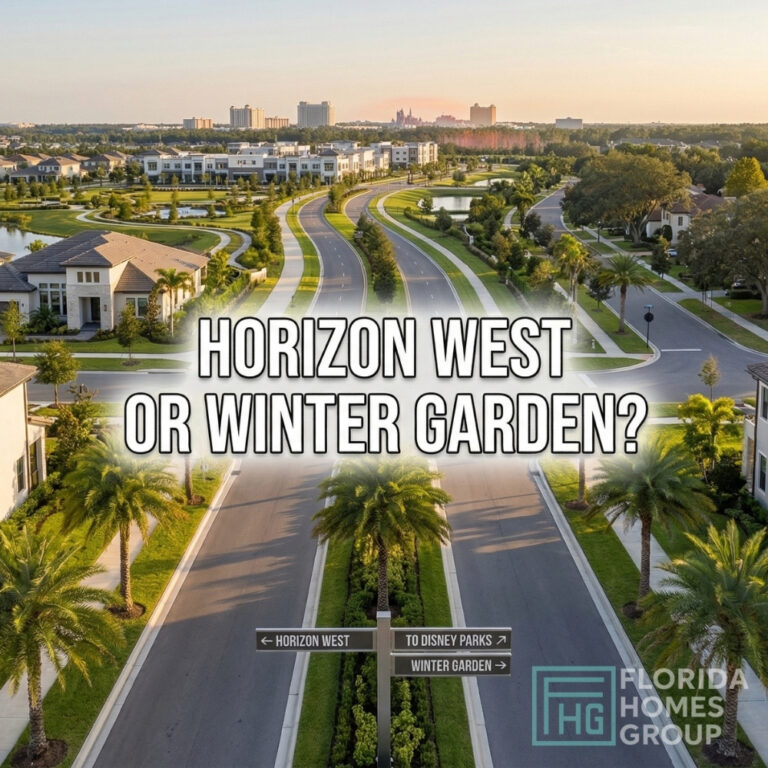
Horizon West and Windermere tend to appeal to buyers who want better access to the Disney side of town. Winter Garden can still work well for that lifestyle while offering a different neighborhood feel. Winter Park typically suits buyers who want a more central Orlando base. Lake Nona stands out for people who value being close to the airport and medical corridor. Clermont can be a strong choice, but only when the buyer is genuinely comfortable with more drive time in exchange for more space and a different pace.
Before you commit to a shortlist, decide what your non-negotiable commute limits are. Think beyond work. Consider errands, airport runs, weekend routines, and the places you know you’ll go repeatedly. That simple step removes a huge amount of guesswork.
What to Check Before You Commit
Once you narrow down your preferred areas, that is when the real due diligence begins.
Start by verifying school zoning for the exact homes or streets you’re considering. Do not assume two nearby neighborhoods feed into the same schools just because they look close together on a map. That can change the feel and long-term suitability of a move very quickly.
Then look more closely at the practical details of the neighborhood itself. In newer construction communities, ask about build timelines, inventory release cadence, lot location, traffic flow, and what future phases may mean for noise, views, or road patterns. In established neighborhoods, pay closer attention to renovation level, lot use, street appeal, and how consistent the surrounding homes feel block by block.
This is also where builder-specific questions matter. If you are looking at communities involving names like Pulte, Ashton Woods, DRB Homes, Dream Finders, MI Homes, Taylor Morrison, or Toll Brothers, ask clear questions about standard features, design selections, warranty process, and what is truly included versus upgraded. The right area can still become the wrong purchase if you do not understand the details behind the home itself.
Field Insights
The Friction: Most relocators narrow Orlando too late. They tour too many unrelated areas, mix very different lifestyle types together, and end up overwhelmed because nothing feels directly comparable anymore.
The Strategy: Narrow by daily life first, then by budget, then by commute. Once those three filters are in place, it becomes much easier to tour neighborhoods with purpose and judge each one based on what actually matters for your move.
FAQ
Is Horizon West the best place to move in Orlando?
It is one of the strongest options for buyers who want newer homes, a master-planned feel, and convenience built into everyday life. It is not automatically the best for everyone, because some buyers will prefer the character of Winter Garden, the privacy of Windermere, the space of Clermont, the maturity of Winter Park, or the airport access of Lake Nona.
Is Winter Garden or Windermere better for relocation?
They suit different priorities. Winter Garden generally feels more local, walkable, and layered, while Windermere leans quieter, more private, and more premium. The better fit depends on the lifestyle you want to wake up to each day.
What should I verify before choosing an Orlando suburb?
Verify the exact school zoning, the realistic commute to your key destinations, and what your budget buys in that specific area. If you’re considering new construction, also verify what is included, how future phases may affect the neighborhood, and what questions need to be answered before you commit.
Orlando is a strong relocation market, but the right move depends on choosing the suburb that fits your lifestyle, budget, and commute expectations most closely. Florida Homes Group brings a practical edge to that process through construction knowledge, builder pipeline familiarity, village-level pricing awareness, and real on-the-ground perspective across Horizon West, Winter Garden, and Windermere.
That matters because relocation decisions are rarely just about the home. They are about how your mornings feel, how far you drive, what your weekends look like, and whether the area still feels right once the novelty wears off. A map will not tell you that, and a listing portal will not connect those dots for you in a meaningful way.
Reach out to Florida Homes Group today for a no-obligation conversation about your next move.
About the Author: Sol Simpson is a licensed Florida real estate agent with Florida Homes Group (Brokerage License #CQ1073198, Agent License #SL3644140), specialising in listing homes across Horizon West, Winter Garden, and Windermere. With seven years of residential construction experience and deep knowledge of new construction across builders including Pulte, Ashton Woods, Toll Brothers, and DRB Homes, Sol helps West Orange County homeowners position and sell their properties competitively in a new construction market.